
Six key takeaways from analyzing easy to build and hard to build software
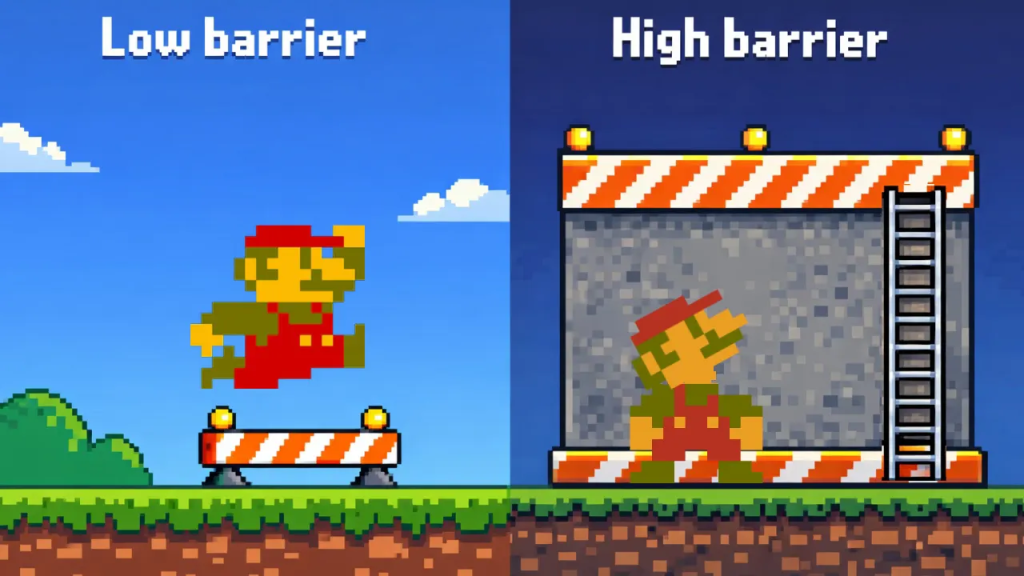
Across the market landscapes I have researched over the years, I noticed a recurring distinction between software categories with strong structural product barriers and categories where entry and imitation is easier (low product barriers).
By hard to build products (high barriers), I mean categories where building a sellable product takes time and cannot be done by just anyone. These product barriers can come from access to proprietary data, specialized tech talent required, complex regulation, capital intensity, deep product scope (a ton of features and integrations required), industry specific knowledge etc.
Thanks for reading SaaS: The Big Picture! Subscribe for free to receive new posts and support my work.
If you want to so see real examples of market categories where products are hard to build you can check these maps I researched:
- European defence landscape. Building and selling a defence related product (whether hardware, software, or both), basically checks all the boxes of high product barriers: From hardware constraints to compliance and industry specific knowledge.
- Billing software landscape. This market is a great example of deep scope products, where you need to build a ton of features and integrations before you can sell it (and customers won’t switch until you offer all of them). This is why these products take a long time to build. And why this landscape is not overcrowded with early stage companies.
- Domain Specific Foundation Models (DSFM) landscape. This landscape is a good illustration of talent related product barriers. It is not the average developer who can truly build a specialized foundation model. The skills and experience required make it hard for just anyone to launch a company in this space. And attracting such talents is expensive, this is why it’s a landscape where seed rounds are worth tens of millions (far more than a normal seed round).
On the other end of the spectrum, you can look at these landscapes for examples of lower barrier to entry products:
- AI receptionists. This market is a good example of the “thin AI wrapper” dilemma, where most companies use the same LLM providers to build their product without really needing proprietary data. This is why I could find so many early stage startups for this map.
- Trading and analytics tools for prediction markets. This category is a good example of a low product barrier to entry due to easily accessible public data. Most trading tools and terminals in this market use the same data from public blockchains. Unlike stock markets where data access is far more fragmented and not publicly available. On top of that, with vibe coding tools it has become very easy to create or copy polished terminal and trading types of interfaces. Another telling sign is that most of these tools are small, independent projects built by indie hackers.
⚠️ Having an easy or hard to build product does not necessarily correlate with how easy or hard it is to be successful. In both cases it’s hard. Why? Because success depends on many other factors such as market structure, timing, go to market execution, branding, recruiting etc.
Marketplaces are a good example of this. They are not always the most complex products to build from a pure engineering standpoint, but they are extremely hard to scale because they require critical mass on both sides and strong network effects. When they work, they can become very large businesses.⚠️
Six key takeaways from analyzing easy to build and hard to build software
Below are six key takeaways that I draw from analyzing many different markets:
- At early stage, low barriers to entry products compete on adoption and revenue rather than product differentiation. Categories with lower product complexity usually mean intense early competition, with many products that look similar and offer comparable features. Because these products are not the hardest to build, the real advantage at this stage is often acquisition, distribution, and speed rather than product quality alone (it counts, but it’s not enough). It is not necessarily the most differentiated product that wins, but the best marketed and sold one. This is visible, for example, in my AI receptionist landscape, where many products look nearly identical.
- Hard to build products look slow until they suddenly grow fast. In categories with strong structural product barriers, companies often take years before breaking through. Early trajectories rarely look exponential and can even look disappointing from the outside. However, once a critical point is reached (mainly product maturity and customer trust) the accumulated effort starts compounding fast.
- Categories with high product barriers to entry attract fewer early stage competitors but face more entrenched incumbents. Hard to build markets tend to be less fragmented, with fewer early stage entrants. At the same time, they often contain older and more entrenched incumbents. I think this is partly due to higher switching costs for customers, and partly because incumbents are better positioned to defend their position through scale, contracts, or compliance against newcomers. Often they also acquire competitors before they become too threatening.
- Hard to build products usually come with slower GTMs, while easy to build products move faster. While not always true, hard to build products typically require sales driven go to market models with longer cycles (enterprise sales, pilots, and heavy customer success involvement). Easier to build categories more often rely on product led growth, self-serve onboarding, or faster inside sales approaches.
- The graveyard of easy to build categories is more crowded. During market research, I often come across many dead or inactive startups in categories with low build complexity (just check Product Hunt for that).
- Easy to build products can evolve into hard to build products. Several of today’s winners started in easy to build categories and later became hard to build products. From what I saw, two main paths seem to emerge here:
- Path #1: Moving from an easy to build category into a hard to build one within the same market. It’s often done by adding more features, building a data moat, or regulatory components.
- Path #2: Bundling multiple categories together. A company bundles together several product categories into one product, offering convenience to customers. Basically the bundling strategy.
Practical consequences
Now that we have seen what it means to operate in a hard or easy to build category, let’s quickly cover the consequences from both a founder and an investor perspective.
Consequences for founders
Pre-PMF
- Be aware of whether you are operating in an easy to build or hard to build category, and what this implies for competition and timelines. E.g:
- Align your ambition with your resources. For easy to build products, do you have strong go to market and distribution capabilities? And are you able to build the product as fast as possible? For hard to build products, do you have the capital, patience, and expertise required to spend more than two to three years building the first scalable product?
Post PMF
- Compete on what actually matters in your category, and resist the temptation to over invest in areas that do not move the needle. E.g: In easy to build categories, don’t add features after features if you haven’t nailed GTM first.
- Continuously reassess whether you are still playing in the same category, or gradually shifting into a more defensible position.
- Be aware of the options you have to increase the barrier to your product, and don’t stay forever in the easy to build territory.
For VCs
- When investing, be aware about the type of product you are backing and the consequences it has on competition intensity, capital needs, time to scale, and exit dynamics.
- Do you believe that the founders you back are the good ones for the type of play required?